Loading...
Serving Casa Grande, AZ and surrounding areas. (520) 340-7534
Casa Grande Concrete installs decorative concrete, driveways, patios, and flatwork for Tempe, AZ homeowners. We know the concrete block construction common in older Tempe neighborhoods, the UV and heat conditions that wear surfaces faster here, and the City of Tempe permit process - with every inquiry answered within 1 business day.
Tempe homeowners use decorative concrete to upgrade small patios, walkways, and driveways on compact lots where space is limited but appearance matters. Decorative finishes hold up better than paint or stain in Tempe's UV-intense environment. See our full range of decorative concrete options and finishes.
A large share of driveways in Tempe's older neighborhoods were poured in the 1970s and 1980s and are now showing the effects of decades of heat cycles and monsoon water pooling at their edges. Replacing a failing Tempe driveway with a properly jointed slab on compacted base stops the cycle of repeated patching.
Tempe residents get significant use from outdoor spaces in the fall and winter months, and patios need to drain correctly before every monsoon season arrives. A concrete patio built with the correct drainage slope and adequate thickness for Tempe's soil conditions stays stable through the heat cycles that cause thinner or poorly prepped slabs to crack.
Tempe's dense street grid means sidewalk repairs often involve coordinating with city right-of-way requirements, and older concrete block homes in this city frequently have original sidewalk sections that have heaved from root intrusion or soil movement. Replacement sections need to match grade and drainage requirements specific to each Tempe neighborhood.
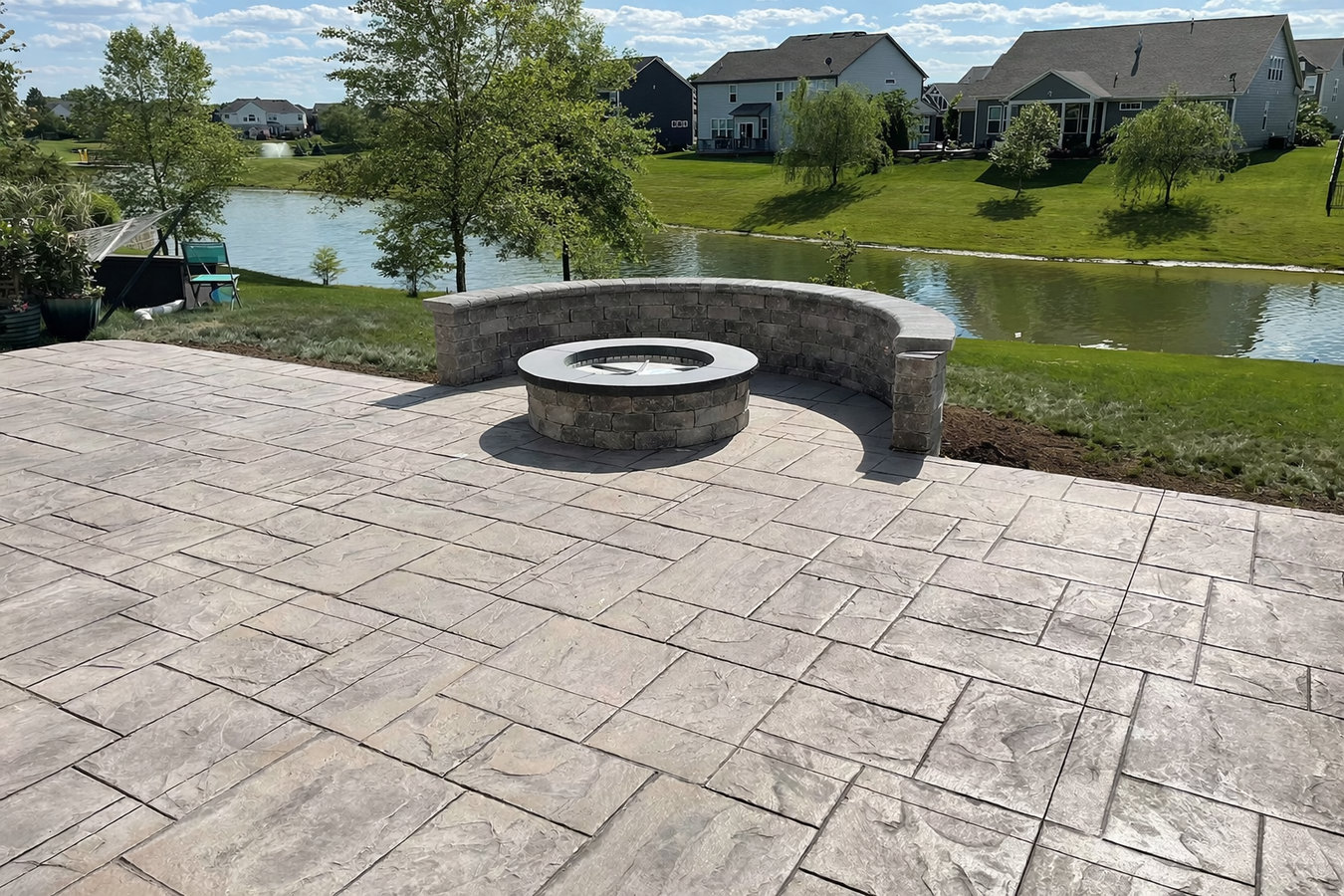
Stamped concrete is a practical choice for Tempe homeowners who want the look of pavers or stone without the long-term maintenance issues that come from individual units shifting in desert heat. A stamped slab stays in place where loose paver systems can spread and separate over time in Tempe's temperature range.
Tempe covers just 40 square miles and has one of the highest population densities in Arizona, with about 180,000 residents packed into a compact urban grid around Arizona State University. Much of the housing stock dates to the 1950s through the 1980s, when the dominant construction method for residential homes in the Phoenix metro was concrete masonry units - what most people call cinder block. These walls hold up well in the desert heat, but they crack over time as soil shifts under foundations, and the older flatwork - driveways, patios, and sidewalks from that era - has now been through 40 to 70 years of heat cycles and monsoon seasons. Patching the surface without addressing the base just restarts the cycle.
Tempe temperatures regularly top 110 degrees F in summer, and the UV exposure at this latitude breaks down concrete surface sealers faster than in almost any other region of the country. Add monsoon storms that can dump an inch or more of rain in under an hour onto the small, flat lots common in this city, and drainage slope becomes critical. Water that cannot move away from a slab edge quickly will undermine the compacted base and cause settling within a few seasons. Every concrete job in Tempe needs to account for both the heat stress above the surface and the drainage conditions below it.
We pull permits through the City of Tempe Community Development department and have worked on homes across Tempe's dense residential neighborhoods. The housing stock near the ASU campus - smaller lots, concrete block walls, flat roofs - demands a different approach than the single-family neighborhoods in south Tempe near Baseline Road and the Ahwatukee border. Lots near campus are narrow and often have restricted access, while south Tempe properties tend to have larger yards and more recent concrete work that is failing from soil movement rather than age alone.
Tempe is well known for Tempe Town Lake on the Salt River and the Mill Avenue district that runs along the west side of the ASU campus. These are the landmarks locals use to orient themselves, and they tell us something useful: the neighborhoods closest to Town Lake and the urban core have the oldest homes in the city, while areas further south are from a later construction era. We factor that into how we plan base prep and drainage for each job, because a 1965 concrete block home near the lake needs a different assessment than a 2000-era stucco house in south Tempe.
We also serve homeowners in Scottsdale to the north, where the luxury housing market and HOA requirements create a different but equally specific set of planning needs. Moving between the two cities is routine for our crew, and homeowners who own or manage property in both benefit from not having to explain local permit requirements to a contractor starting from scratch.
We respond within 1 business day. Tell us the type of work, the approximate size, and your neighborhood in Tempe. We schedule a site visit before any written price - conditions vary significantly between older neighborhoods near ASU and newer streets in south Tempe.
We inspect your Tempe property, measure the area, and check base conditions - including how the original compacted material has held up and whether drainage slope needs correction. You receive a written estimate with materials, permits, labor, and cleanup itemized. This is where we discuss cost openly.
We apply for all required City of Tempe permits before any excavation begins. Compromised subgrade is removed and replaced with compacted gravel. Summer pours are scheduled for early morning to manage curing risk in extreme heat. The crew stays on site until drainage slope is confirmed.
After the pour we do a walkthrough before the crew leaves. The surface needs 24 to 48 hours before foot traffic and seven days before vehicle use. We leave written sealing and care guidance so you know how to protect the slab through the first Tempe summer.
We serve all of Tempe - from the neighborhoods near ASU to the quieter streets in south Tempe near Baseline Road. No-pressure estimate. Written price before any work starts.
(520) 340-7534Tempe is a compact, densely built city in the heart of the Phoenix metro, covering about 40 square miles between Phoenix to the west, Scottsdale to the north and east, and Chandler and Mesa to the south and east. Arizona State University sits at the center of the city and has a main campus enrollment of more than 60,000 students, which drives a housing market that is roughly half renter-occupied. The Tempe Town Lake on the Salt River is the city's most recognized landmark, surrounded by parks, trails, and the downtown area. The neighborhoods nearest to campus and the lake are the oldest in the city, with a mix of small ranch homes, concrete block duplexes, and apartment complexes built from the 1950s through the 1980s.
South Tempe, stretching toward Baseline Road and the Ahwatukee foothills, is a different character entirely - quieter residential streets with newer single-family homes, larger lots, and more recent concrete flatwork. The commercial corridors along Apache Boulevard, Rural Road, and Mill Avenue tie the city together and are well known to anyone who has spent time here. Tempe borders Mesa to the east - a city with its own dense inventory of aging concrete that shares many of the same climate and soil conditions as Tempe.
Durable, professionally poured concrete driveways built to handle Arizona heat and heavy vehicles.
Learn moreCustom outdoor patios designed for comfort and crafted to last through desert weather.
Learn moreDecorative stamped concrete that mimics stone, brick, or wood at a fraction of the cost.
Learn moreSmooth, sealed garage floor slabs resistant to oil, chemicals, and cracking.
Learn moreArtistic concrete finishes including staining, overlays, and custom textures.
Learn moreSturdy retaining walls that control erosion and define your landscape.
Learn moreInterior and exterior concrete floor installations for residential and commercial spaces.
Learn moreSlip-resistant, heat-reflective pool deck surfaces built for the Arizona sun.
Learn morePrecisely formed concrete steps and entryways for safe, clean access.
Learn moreEngineered concrete slab foundations built to support homes and structures reliably.
Learn moreFull foundation installation services for new construction and additions.
Learn moreHeavy-duty commercial parking lots designed for high traffic and longevity.
Learn moreReinforced concrete footings ensuring a stable base for walls, fences, and structures.
Learn moreFoundation lifting and leveling to correct settling and restore structural integrity.
Learn morePrecision concrete cutting for expansion joints, openings, and demolition prep.
Learn moreServing these cities and communities.
Concrete in Tempe takes a beating from heat, UV, and monsoon storms - the sooner you address cracks or drainage issues, the less base repair costs later. Call or send us a message today.