Loading...
Serving Casa Grande, AZ and surrounding areas. (520) 340-7534
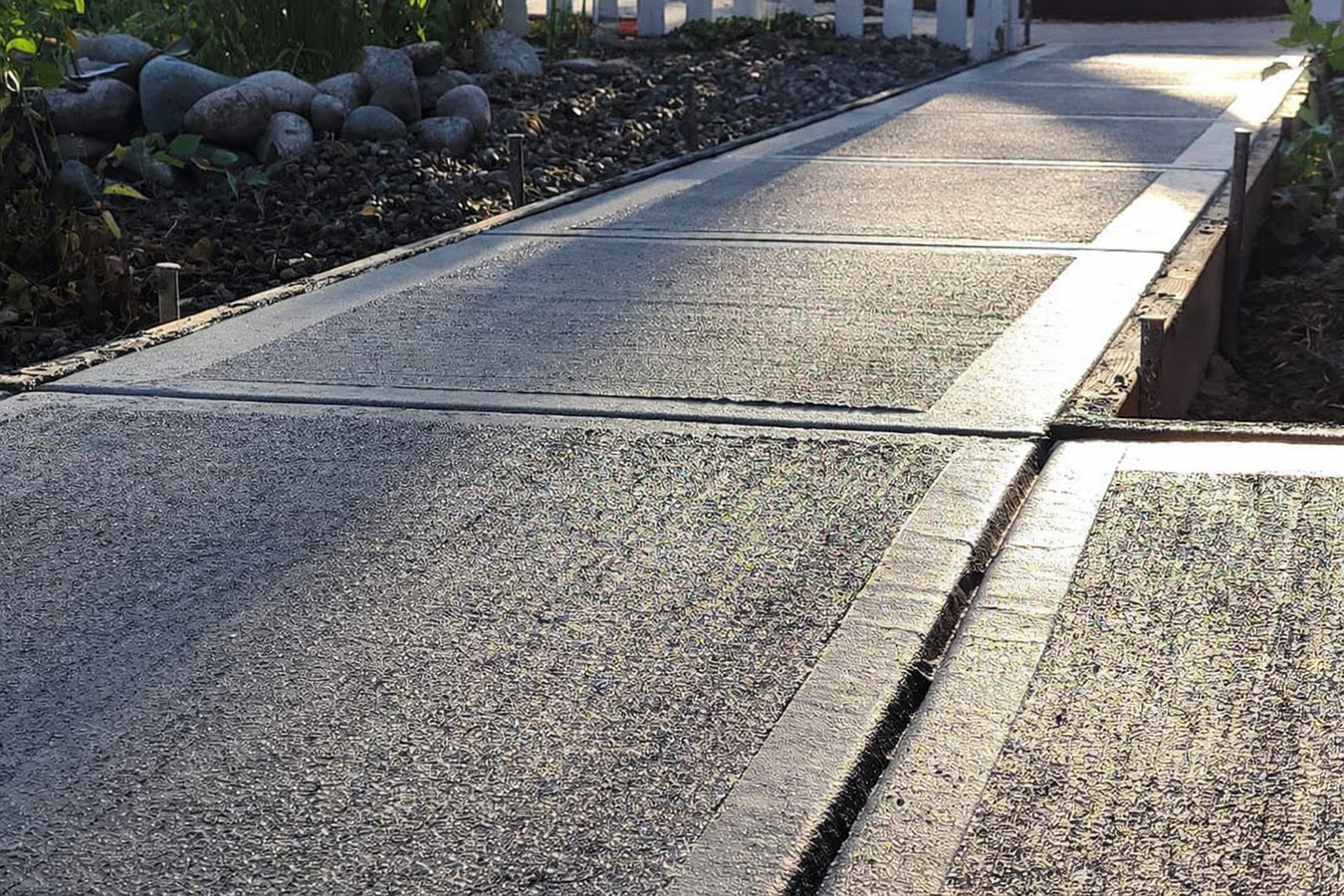
Sidewalks crack and heave in Casa Grande because of the soil, not just the heat. We build walkways with the base prep and scheduling that this area actually requires - so you get a path that drains well and stays level for years.
Concrete sidewalk building in Casa Grande means digging out the path to the right depth, compacting the soil, setting forms, and pouring a finished slab - most residential projects in the 50 to 100 linear foot range take one to two days of active work, then 24 to 48 hours before you can walk on it.
A lot of Casa Grande homeowners are dealing with sidewalks that cracked or heaved within a few years of being installed. The culprit is almost always the ground preparation - or the lack of it. The native soil here has clay that shifts with moisture, and a slab poured without proper compaction and base depth will follow that movement. Building it right the first time is far less expensive than tearing out failed concrete two years later.
Sidewalk work pairs naturally with other flatwork projects. If you are planning a driveway at the same time, combining both under one contract reduces mobilization costs. We also handle garage floor concrete and can coordinate a full concrete driveway if you want everything connected and finished to the same standard.
These are visible signs you can check yourself before calling a contractor.
Cracks cutting across your sidewalk at an angle - rather than following the straight control lines built into it - usually mean the ground underneath has shifted. In Casa Grande, the clay-heavy soil expands and contracts with the wet-dry cycle of monsoon season. Diagonal cracks tend to get worse over time and become a trip hazard. Once you see them spreading, replacement is usually more cost-effective than patching.
Walk your sidewalk and notice whether any sections feel higher or lower than the ones next to them. Even a half-inch difference in height is enough to catch a foot and cause a fall. Uneven sections in Casa Grande are often caused by soil movement under the slab - the same desert conditions that make ground prep so important during installation.
If the top layer is peeling away in thin chips or crumbling when you press on it, the surface has started to fail. This can happen when concrete was poured in hot weather without proper curing - a common issue in older Casa Grande sidewalks installed before contractors widely adopted hot-weather best practices.
Many older Casa Grande homes - particularly those built in the 1970s and 1980s - were constructed without a formal front walkway. If you are navigating across bare desert landscaping or loose gravel to reach your door, a new concrete sidewalk adds both safety and curb appeal and is one of the more straightforward concrete projects a homeowner can commission.
Our concrete sidewalk service covers the full project from permit through final walkthrough. Standard residential walkways are poured at four inches thick - the right depth for foot traffic. If the path includes a driveway apron or an area where vehicles might roll over it, we go closer to six inches and add reinforcement. Every walk is built with a slight slope away from your home so water drains off the surface rather than pooling and working its way underneath the slab.
Finish options include standard broom texture - which provides grip and is the most common choice - or a smoother finish for cleaner-look entries. If you want a decorative path that coordinates with a stamped patio or driveway, we can match patterns and colors across the project. For homeowners connecting a new walk to an existing garage floor or a recently poured driveway, we plan the connection point carefully so the joint between the two slabs stays clean and does not become a future cracking point.
The most practical and common choice. Slightly textured surface provides grip in all weather and holds up well in desert conditions.
Matches a stamped patio or driveway for a consistent look across your property. Best suited for front entries and visible approach paths.
Sidewalks connecting to city curbs or public streets. We handle all permitting with Casa Grande Development Services from start to close.
Casa Grande has two conditions that most other cities do not stack on top of each other: extreme summer heat that can crack fresh concrete before it sets properly, and a native soil that moves with every wet-dry cycle. Pinal County soils have clay-heavy caliche layers that swell a little during monsoon season and shrink back in the dry months. That movement is one of the leading causes of cracked and uneven sidewalks in this area. A contractor who skips proper excavation and base compaction is not saving you money - they are building a problem you will pay for in a few years. Homeowners in Maricopa and throughout the broader Pinal County area deal with the same soil conditions and ask us the same questions about why their previous sidewalks failed.
The heat window also matters for scheduling. Most experienced local contractors prefer to work on sidewalk projects between October and April, when temperatures are manageable. Monsoon season - roughly mid-June through September - adds the risk of a heavy downpour hitting fresh concrete before it has cured. If your project is in summer, expect early-morning start times. Neighbors in Coolidge face the same seasonal constraints, and our crew plans around them on every job. We do not pour concrete at noon in July.
Here is what to expect from first contact through the finished walk.
We respond within 1 business day. We will schedule a free on-site visit to measure the path, look at the ground conditions, and give you a written quote that breaks out labor and materials separately - not just a single number.
If your sidewalk connects to a public street or the city right-of-way, we file the permit with Casa Grande Development Services before any work begins. This usually takes a few business days. Once approved, we confirm your start date and tell you exactly what to move out of the work zone.
In Casa Grande, this almost always happens early in the morning to beat the heat. We dig to the right depth, remove any unstable soil, compact the base, set forms, and pour. Control joints are cut in at this stage to guide any future cracking into straight, barely visible lines.
Plan for 24 to 48 hours before light foot traffic and a full week before placing anything heavy on the surface. If a city inspection was required, that happens during the curing period. We do a final walkthrough with you to review the drainage slope, the joints, and anything to watch in the first few months.
Free on-site estimate. Written quote before any work starts. No obligation to commit.
(520) 340-7534Every City of Casa Grande permit that applies to your sidewalk project is applied for before a shovel goes in the ground. You will have documentation on file, and the work will be properly inspected - no surprises when you sell your home.
The soil in and around Casa Grande expands when wet and shrinks when dry - and that movement cracks sidewalks that were not built for it. We dig down, remove problem material, and compact a stable base before we pour anything. That prep work is what separates a 25-year slab from a 3-year one.
Summer temperatures above 100 degrees F cause fresh concrete to dry out on the surface before it has set underneath. We schedule every warm-weather pour for early morning and use curing techniques that slow evaporation. We will not rush a pour in bad conditions - and a contractor who will should raise a concern.
Our license is on file with the Arizona Registrar of Contractors and verifiable at roc.az.gov. We carry liability insurance and workers compensation on every job in the Casa Grande area and beyond.
The permit handling, soil prep, and heat scheduling are not extras we add on - they are how we do every job in this area. That approach is why the sidewalks we build in Casa Grande are still flat and crack-free years after the pour. You can verify our Arizona ROC license at roc.az.gov before you call us, and you can check permit-related questions directly with Casa Grande Development Services.
You can look up any Arizona contractor license in seconds at the Arizona Registrar of Contractors. For hot-weather concrete best practices, the American Concrete Institute publishes guidelines specifically covering desert-climate pours.
Upgrade your garage with a properly sloped and finished concrete floor that handles vehicle weight and desert temperature swings.
Learn moreConnect your new sidewalk to a full concrete driveway built to the right thickness for your vehicles and soil conditions.
Learn moreFall and winter are the best pouring months in the desert - reach out now and get your project on the schedule before the booking window fills.