Loading...
Serving Casa Grande, AZ and surrounding areas. (520) 340-7534
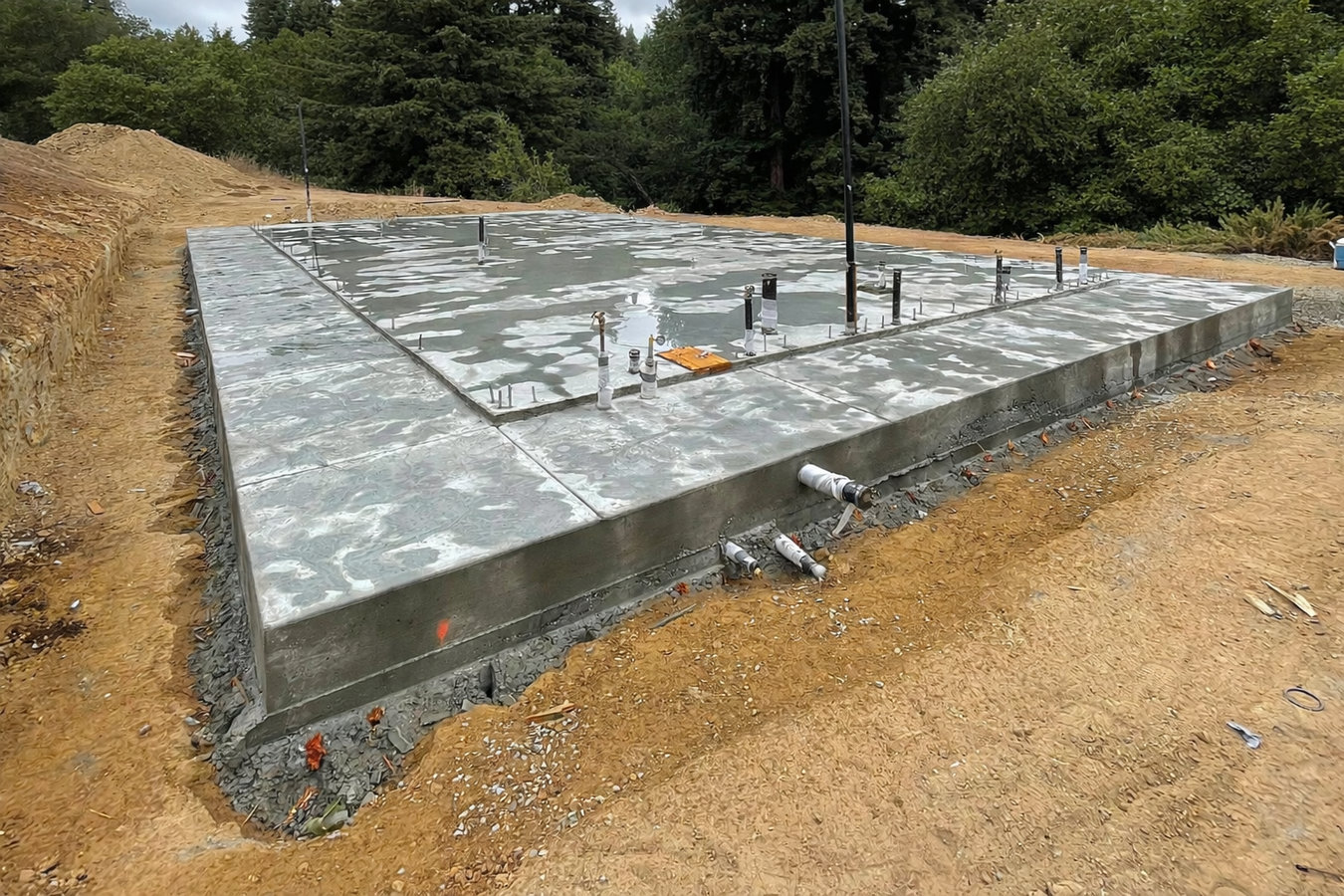
Casa Grande homes sit on caliche and clay that shifts every monsoon season. We pour reinforced slab foundations built for your specific lot conditions, with permits and inspections handled from start to finish.
Slab foundation building in Casa Grande means pouring a reinforced concrete pad directly on prepared desert soil - most residential slabs take three to five days of active work followed by a curing period before any framing starts, and a city permit is required before the crew ever breaks ground.
Almost every home in Casa Grande sits on a slab foundation. It is the standard here because the desert climate and soil conditions make it practical - no basement, no crawl space, just concrete on prepared ground. The challenge is that the soil underneath is not always simple. Caliche layers, clay that swells and shrinks with moisture, and extreme summer heat all affect how a slab needs to be designed and poured to hold up over decades.
A slab foundation is also the starting point for additions and accessory structures. If you are planning a room addition or detached garage, the new slab needs to be poured and inspected before any framing work can begin. We also handle full foundation installation for larger new-construction scopes, and structural concrete footings when your project also needs support for posts or attached structures.
These are the most common situations that bring Casa Grande homeowners to us.
If you are building on a vacant lot in Casa Grande, you need a slab foundation before anything else can happen. No framing, plumbing, or electrical work begins until the slab is in place and passes city inspection. This is the most straightforward reason to call - a new project needs a solid base.
Small hairline cracks in a concrete floor are common and usually harmless. But cracks wider than about a quarter of an inch, cracks running diagonally from door corners, or cracks that seem to be getting longer are signs the slab may be moving. In Casa Grande, this is often linked to the expansive clay soils that shift with seasonal moisture changes.
When a slab foundation shifts, the walls above it shift too. If doors that used to swing freely now stick or drag, or if you notice gaps forming at the tops of door frames, the foundation underneath may be moving. This is a common complaint in neighborhoods built on unimproved desert soil where ground prep was rushed during rapid growth years.
Any new structure attached to or near your home needs its own properly built foundation. If you are planning an addition or a detached garage - common projects in Casa Grande - a new slab pour is required before construction can begin. A permit will also be needed, so planning ahead matters.
Our slab foundation service covers every step from permit application through final inspection. We assess the soil on your specific lot, design the slab thickness and reinforcement to match what we find, handle all paperwork with the City of Casa Grande Building Safety Division, and coordinate inspection scheduling so nothing stalls your build. We also handle related concrete work when your project needs it - including full foundation installation for new home construction and structural concrete footings for fences, posts, and attached structures.
Every slab we pour includes a compacted gravel sub-base, a moisture barrier, and steel reinforcement placed in a grid throughout the slab and thickened perimeter. These are not optional upgrades - they are what separates a slab that holds for decades from one that starts cracking within a few years when the desert soil does what it always does. We use early-morning pours in summer and apply curing compound immediately after finishing to protect the surface in Casa Grande heat.
Full foundation slab for a new single-family home or manufactured home - the most common scope we handle in Casa Grande.
New slab for a room addition, attached garage, detached garage, or casita on an existing residential property.
Removal and replacement of an existing damaged or failed slab where repair is no longer a practical option.
Casa Grande has grown faster than almost any other city in Arizona over the past two decades, and a lot of that growth happened quickly. Some of the slabs poured during busy building years were rushed - minimal soil prep, shallow footings, not enough reinforcement for the caliche-and-clay ground that sits underneath most of Pinal County. Homeowners in those newer neighborhoods are now seeing the results: cracks, sticking doors, and slabs that have shifted. Building a slab the right way in this soil starts with taking the preparation phase seriously, not treating it as something to get through fast. The USDA NRCS Web Soil Survey shows the variation in soil types across Pinal County - and why a one-size approach to slab design does not work here.
The desert climate adds another layer. Concrete poured in temperatures above 100 degrees F loses moisture too fast without specific precautions, and the same goes for concrete that gets rained on before it has cured during monsoon season. We serve homeowners throughout the Casa Grande area, including clients in Coolidge and Maricopa, where the same soil and climate conditions apply. The planning and pour techniques we use in Casa Grande apply across the whole region.
We respond within 1 business day. We will ask about the size of the slab, whether it is for a new home or an addition, and your general timeline. Most projects require a site visit before we can give a firm quote, because soil conditions and access affect both the price and approach.
Before any digging or forming begins, we submit a permit application to the City of Casa Grande Building Safety Division. This is required - not optional. Permit approval in Casa Grande can take a week or more depending on city workload, so we factor this into the schedule from day one.
Once the permit is approved, the crew grades and compacts the soil, lays a gravel base and moisture barrier, and builds the forms. If we hit caliche during prep - common in Pinal County soils - we break through it before compacting. This step takes the most time because it determines how long your slab lasts.
The pour happens in a single day, almost always early morning in summer to beat the heat. After the surface is finished and curing compound applied, the slab needs at least seven days before framing starts. A final city inspection closes out the permit and gives you documentation to keep with your home records.
We visit your lot, assess the soil conditions, and give you a written estimate before any work starts. No pressure, no obligation.
(520) 340-7534Pinal County summer temperatures regularly push past 110 degrees F. We schedule every summer pour before sunrise and use chilled-water mix techniques to slow moisture loss during curing. A slab poured without those precautions loses strength before it ever sets - and that weakness shows up in cracks within the first few years.
We look at the actual ground on your specific lot before designing the slab - checking for caliche depth, clay content, and drainage patterns. Casa Grande sits on desert soil that moves with moisture, and the right reinforcement and perimeter thickness for your lot is not the same as the house next door.
We file the permit application, coordinate inspection scheduling with the City of Casa Grande, and track approval so your timeline stays on schedule. Unpermitted foundation work creates problems at resale and voids some homeowner insurance claims - so doing it right protects your investment long-term.
Our Arizona Registrar of Contractors license is verifiable at roc.az.gov. We carry liability and workers compensation coverage on every job. We have poured slabs on residential lots throughout Pinal County, including new builds, garage additions, and casita pads in multiple Casa Grande neighborhoods.
Slab foundation work in Casa Grande is not complicated when it is done by someone who has worked in this soil and this climate before. Our Arizona ROC license is verifiable at roc.az.gov, and the Portland Cement Association standards we follow for curing and reinforcement are the same ones used on projects built to last 50-plus years in harsh desert climates.
For larger or more complex foundation scopes - including full residential new-construction foundations with engineered plans - our foundation installation service covers the whole process.
Learn moreWhen your project also needs structural footings for posts, fences, or attached structures, we handle that work alongside or after the slab.
Learn moreSpring and fall slots fill fast - lock in your date now before the next building season books up and your project gets pushed back months.